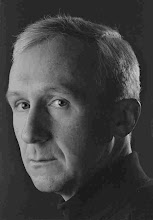
Michael's, on West 55th Street, is a well-known media hangout that I finally hung out in this week. (I think I need to get out more.) The event was a reception for Lorraine Branham, the new dean of the Newhouse School of Communications at Syracuse University. Alert readers of this blog already know that the Newhouse School is my alma mater.
The restaurant served finger food, which was quite nice, and free booze, which was even nicer. Journalists will never pass up a chance to drink for free, especially in this economic climate.
I talked briefly with Dean Branham and mentioned that the sports department at The New York Times, where I've worked since 1997, is lousy with Newhouse graduates. She was already aware of that. I'm afraid that means she knows where to find us. Dean Branham struck me as intelligent and energetic, and I was reassured that my alma mater is in capable hands. Most of her professional background is in newspapers, so I am, of course, rooting for her.
Dean Branham has a tough act to follow. David Rubin has led the Newhouse School for a long time, and during his tenure a third building was added to Syracuse's communications complex. The university was talking about that building when I was a student there, so his success in bringing it to fruition was a bit like finding the Holy Grail, or constructing the Second Avenue Subway.
I had the opportunity to meet Dean Rubin about five years ago, during a weekend of festivities
marking the 100th anniverary of The Daily Orange, the student newspaper at Syracuse. I confess that whenever I read the material he wrote in alumni newsletters and university publications, I found it anodyne and forgettable. In person, he is an impressive man, and I left that weekend understanding why he was in charge of the school.
As an aside, I had the privilege of being the editor in chief of the Daily Orange during its 75th anniversary celebration. Those of you who are good at math will be able to figure out how old I am.
During the reception at Michael's, I had the chance to catch up with Mark Sullivan, one of my colleagues back in the day at The Daily Orange. We spent most of our time Monday night talking about the Mets.
Friday, October 31, 2008

Monday, September 22, 2008
New York Is Book Country, Part 2
Central Park was beautiful on Sunday, and I was happy to be there. I felt I was in competition with the weather; only a few people were in the authors' tent, so I wound up schmoozing and signing instead of reading.
I followed Philip Lopate on the schedule. He talked to only a few people as well, and he's a Big Name Author.
I did sell a few books, and I gave away a bunch more. As always, it's a treat to talk to people about writing in general, and about BLOOD ALLEY in particular.
After I left the authors' tent, I wandered around for a while and picked up a collection of Hans Christian Andersen tales for my daughter, who just turned eight. As I was leaving the fair, I noticed that the authors' tent was full. The audience was for a group of children's book authors who were putting on a multimedia show, complete with music.
Next time I'll know how to attract a crowd ...
I followed Philip Lopate on the schedule. He talked to only a few people as well, and he's a Big Name Author.
I did sell a few books, and I gave away a bunch more. As always, it's a treat to talk to people about writing in general, and about BLOOD ALLEY in particular.
After I left the authors' tent, I wandered around for a while and picked up a collection of Hans Christian Andersen tales for my daughter, who just turned eight. As I was leaving the fair, I noticed that the authors' tent was full. The audience was for a group of children's book authors who were putting on a multimedia show, complete with music.
Next time I'll know how to attract a crowd ...
Monday, September 15, 2008
New York Is Book Country
I'm going to be appearing at the New York Is Book Country fair on Sunday, Sept. 21, in Central Park, in the authors' tent near the Bandshell. I'm looking forward to the gig (my first one in a while) and I hope to meet some of BLOOD ALLEY's readers.
The gig begins at noon and is supposed to run until 12:40. I'll be reading from the book, signing copies and taking questions.
And then I'll have to run ... because my daughter's eighth birthday party will begin in a downtown location at 2:30.
If I survive the day, I plan to blog about it.
The gig begins at noon and is supposed to run until 12:40. I'll be reading from the book, signing copies and taking questions.
And then I'll have to run ... because my daughter's eighth birthday party will begin in a downtown location at 2:30.
If I survive the day, I plan to blog about it.
Monday, July 28, 2008
Jackie Robinson
I had a few thoughts inspired by what is likely to be my last visit to Shea Stadium. I went with my wife and daughter on Sunday to see the Mets beat the Cardinals, 9-1. The victory ran my daughter's lifetime record at Shea to 5-0.
Rising next to the stadium is the Mets' new park, Citi Field, a mostly brick edifice meant to replicate Ebbets Field, the former home of the Brooklyn Dodgers. Inside the new park is a space that will be called the Jackie Robinson Rotunda. It will celebrate the life and career of the man who broke the color barrier in major league baseball.
I allude to Robinson's impending arrival with the Dodgers several times in "Blood Alley," which is set in the winter of 1946-47. The book's protagonist, Patrick Grimes, has the "enlightened" attitude that Robinson should play in the majors if he has the ability. Seems like an uncontroversial opinion now, but back then it was radical. The misty eye of nostalgia makes it seem as if only a few die-hard reactionaries and bigots were opposed to Robinson's playing in the majors. In fact, just about the entire baseball establishment was against it, as were more than 80 percent of the fans. In "Blood Alley," several of the more unsympathetic characters take potshots at Robinson and the "radical" idea of integrating the majors. To modern eyes, those ideas seem malevolent, if not borderline insane. For that time, they were mainstream opinion.
In the end, the benefits all accrued to the Dodgers. Branch Rickey, the team's general manager, is regarded as a civil rights pioneer. (He was, but he was incredibly cheap toward his players. In fairness, so were all the other baseball executives of that era.)
Perhaps more important, by doing right, the Dodgers did well. The pipeline they established with African-American players enabled them to dominate the National League from the late 1940s into the mid 1960s.
And I'm looking forward to entering the Mets' new park through Jackie Robinson Rotunda, and talking to my daughter about him.
Rising next to the stadium is the Mets' new park, Citi Field, a mostly brick edifice meant to replicate Ebbets Field, the former home of the Brooklyn Dodgers. Inside the new park is a space that will be called the Jackie Robinson Rotunda. It will celebrate the life and career of the man who broke the color barrier in major league baseball.
I allude to Robinson's impending arrival with the Dodgers several times in "Blood Alley," which is set in the winter of 1946-47. The book's protagonist, Patrick Grimes, has the "enlightened" attitude that Robinson should play in the majors if he has the ability. Seems like an uncontroversial opinion now, but back then it was radical. The misty eye of nostalgia makes it seem as if only a few die-hard reactionaries and bigots were opposed to Robinson's playing in the majors. In fact, just about the entire baseball establishment was against it, as were more than 80 percent of the fans. In "Blood Alley," several of the more unsympathetic characters take potshots at Robinson and the "radical" idea of integrating the majors. To modern eyes, those ideas seem malevolent, if not borderline insane. For that time, they were mainstream opinion.
In the end, the benefits all accrued to the Dodgers. Branch Rickey, the team's general manager, is regarded as a civil rights pioneer. (He was, but he was incredibly cheap toward his players. In fairness, so were all the other baseball executives of that era.)
Perhaps more important, by doing right, the Dodgers did well. The pipeline they established with African-American players enabled them to dominate the National League from the late 1940s into the mid 1960s.
And I'm looking forward to entering the Mets' new park through Jackie Robinson Rotunda, and talking to my daughter about him.
Monday, July 21, 2008
A Site I Like
As I've talked to people about "Blood Alley," both on my book tour and in casual settings, I've found a considerable amount of interest in New York City history, and in finding links to the ever-vanishing past. Despite the efforts of preservationists, the force of change in New York is relentless.
For anyone interested in getting a good, long glimpse of long-gone parts of New York, please check out the Forgotten New York web site, which can be linked at http://www.forgotten-ny.com/.
One of the best things about this site is its refusal to indulge the obvious. There's a lot of stuff from the boroughs outside Manhattan, and from neighborhoods that never make the tourist guides.
I'm tempted to say that I've wasted plenty of time at this site, but that would be inaccurate, since I always find stuff that's offbeat and interesting. But I will say this: it's an easy site to be distracted by, and then to get lost in.
For anyone interested in getting a good, long glimpse of long-gone parts of New York, please check out the Forgotten New York web site, which can be linked at http://www.forgotten-ny.com/.
One of the best things about this site is its refusal to indulge the obvious. There's a lot of stuff from the boroughs outside Manhattan, and from neighborhoods that never make the tourist guides.
I'm tempted to say that I've wasted plenty of time at this site, but that would be inaccurate, since I always find stuff that's offbeat and interesting. But I will say this: it's an easy site to be distracted by, and then to get lost in.
Friday, July 11, 2008
Hero Editor
Early Wednesday morning, a 29-year-old man protesting something climbed partway up the New York Times building, where I work in the sports department. I had gone home by then ... but my wife, Jill, one of the night editors at the Daily News, received a call from the climber. She talked to the man long enough to develop a rapport with him, eventually came over to the Times building to talk to the dude in person, and wound up playing a big role in helping the NYPD get the climber safely off the facade of the building.
The full story, told by Jill in a much more entertaining manner, can be found at http://www.nydailynews.com/ny_local/2008/07/10/2008-07-10_untitled__jill10m-2.html.
Some media attention has come our way as a result of all this. Like most journalists, Jill and I are much comfortable being on the newsgathering, and not newsmaking, side of the business. But, for the record, I'll state that I think my wife displayed a lot of moxie Wednesday morning, and I'm awfully proud of her. One of my colleagues at The Times, Carlos Ygartua, summed it up best: "It's like you're married to Nancy Drew."
The full story, told by Jill in a much more entertaining manner, can be found at http://www.nydailynews.com/ny_local/2008/07/10/2008-07-10_untitled__jill10m-2.html.
Some media attention has come our way as a result of all this. Like most journalists, Jill and I are much comfortable being on the newsgathering, and not newsmaking, side of the business. But, for the record, I'll state that I think my wife displayed a lot of moxie Wednesday morning, and I'm awfully proud of her. One of my colleagues at The Times, Carlos Ygartua, summed it up best: "It's like you're married to Nancy Drew."
Monday, June 30, 2008
Robert Moses
One name keeps coming up unbidden during my appearances for BLOOD ALLEY. The name (as you've probably surmised from the title of this post) is Robert Moses, the longtime master builder and planner of New York City and State.
Moses did play a role in the development of the United Nations complex. After the Rockefeller family donated the land to the UN, Moses wrote up the legal agreements that were necessary to make the deal a reality. It took him only four days. By all accounts, the agreements were flawless.
Moses is mentioned a couple of times in passing in my book.
He is most widely known today as the subject of Robert Caro's monumental (in every sense of the word) biography, THE POWER BROKER. Caro's book came out in the mid-1970s, when New York had reached rock bottom, and it laid just about all of the city's ills at Moses's feet. In fact, while I was growing up, my parents always referred to him as "Robert Moses the Man Who Ruined New York," and for a long time I thought that was his full name.
As the years have passed, attitudes toward Moses have softened. (Mine included.) For all his faults -- which were, yes, monumental -- the man made some vital contributions to the New York area: Jones Beach, the UN, Lincoln Center, and lots and lots of parks. Although the city and state's elected leaders should never have let the man get anywhere near a road or a housing project.
Toward the end of his career, Moses's nemesis appeared in the unlikely form of Jane Jacobs, who called for a more organic, bottom-up method of urban development. Moses had the power, but Jacobs won the argument. Today her ideas are much more influential than this. And rightly so.
But still -- New York City has lost its capacity to get great things done. The city needs a new Penn Station. It can't get built. We're approaching the seventh anniversary of the 9/11 attacks, and the Trade Center site is still, essentially, a hole in the ground. The latest news reports cast serious doubt that anything significant will be built on the site by the tenth anniversary of the attacks.
Robert Moses got things done. Sometimes it wasn't pretty. Sometimes people's feelings got hurt. But creating big public projects will inevitably create friction, and municipalities need a man or a woman who has technical expertise and a large amount of chutzpah to get the deed accomplished.
Seen from the early 21st century, Caro's book looks less like the last word and more like the case for the prosecution. It is a cautionary tale. Nobody should ever amass all the power that Moses had (numerous city and state positions at the same time, plus heading a number of unelected and unaccountable public authorities). Politicians should not abdicate their most important responsibility -- oversight over the people who are supposed to do the public's business.
But, writing as a resident of Lower Manhattan, it would really be nice to have somebody around who could get Ground Zero rebuilt.
Moses did play a role in the development of the United Nations complex. After the Rockefeller family donated the land to the UN, Moses wrote up the legal agreements that were necessary to make the deal a reality. It took him only four days. By all accounts, the agreements were flawless.
Moses is mentioned a couple of times in passing in my book.
He is most widely known today as the subject of Robert Caro's monumental (in every sense of the word) biography, THE POWER BROKER. Caro's book came out in the mid-1970s, when New York had reached rock bottom, and it laid just about all of the city's ills at Moses's feet. In fact, while I was growing up, my parents always referred to him as "Robert Moses the Man Who Ruined New York," and for a long time I thought that was his full name.
As the years have passed, attitudes toward Moses have softened. (Mine included.) For all his faults -- which were, yes, monumental -- the man made some vital contributions to the New York area: Jones Beach, the UN, Lincoln Center, and lots and lots of parks. Although the city and state's elected leaders should never have let the man get anywhere near a road or a housing project.
Toward the end of his career, Moses's nemesis appeared in the unlikely form of Jane Jacobs, who called for a more organic, bottom-up method of urban development. Moses had the power, but Jacobs won the argument. Today her ideas are much more influential than this. And rightly so.
But still -- New York City has lost its capacity to get great things done. The city needs a new Penn Station. It can't get built. We're approaching the seventh anniversary of the 9/11 attacks, and the Trade Center site is still, essentially, a hole in the ground. The latest news reports cast serious doubt that anything significant will be built on the site by the tenth anniversary of the attacks.
Robert Moses got things done. Sometimes it wasn't pretty. Sometimes people's feelings got hurt. But creating big public projects will inevitably create friction, and municipalities need a man or a woman who has technical expertise and a large amount of chutzpah to get the deed accomplished.
Seen from the early 21st century, Caro's book looks less like the last word and more like the case for the prosecution. It is a cautionary tale. Nobody should ever amass all the power that Moses had (numerous city and state positions at the same time, plus heading a number of unelected and unaccountable public authorities). Politicians should not abdicate their most important responsibility -- oversight over the people who are supposed to do the public's business.
But, writing as a resident of Lower Manhattan, it would really be nice to have somebody around who could get Ground Zero rebuilt.
Subscribe to:
Posts (Atom)